Trapped by Snow, Surrounded by Secrets
When a snowstorm cuts off the manor from the outside world on the eve of a wedding, shadows flicker on the walls, cast by the flames of a fireplace. Somewhere above, old tapes hidden in the attic start to sizzle. With this claustrophobic setup, Freida McFadden’s Never Lie pulls readers into a chilling psychological game of truth and deception.
The manor, once owned by missing psychiatrist Adrienne Hale, isn’t just physically isolated—it’s a showcase of the darkest parts of the human mind. Each tape peels back a layer of carefully maintained lies, exposing something raw underneath.
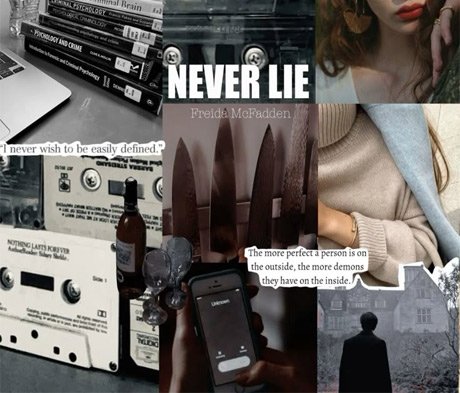
The Attic Tapes: Echoes from a Missing Mind
The story unfolds like a Russian nesting doll. Every truth hides a deeper secret. When Tricia, the new bride, finds the therapy tapes while organizing the attic, she thinks she’s uncovering clues to Adrienne’s disappearance. But the recordings become something more: a mirror reflecting her own buried past.
Anatomy of Fear: Therapy or Control?
On the tapes, Dr. Adrienne coolly dissects her patients’ minds. She explains how EJ, diagnosed with narcissistic personality disorder (NPD), uses charm to manipulate others. She describes victims of abuse developing Stockholm syndrome out of fear. But her calm, professional tone masks something colder: the subtle use of therapy as a tool to control rather than to heal. Her acclaimed work, Anatomy of Fear, isn’t just a clinical analysis—it’s a manual for manipulation.
Marriage on Thin Ice: Vows Turned into Weapons
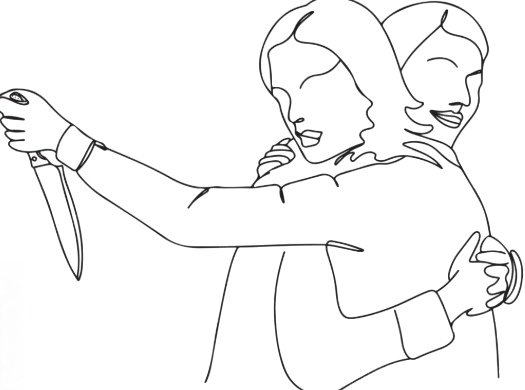 At the heart of the novel is its characters, each layered and unpredictable. Tricia starts as a seemingly innocent outsider, but soon we learn she’s deeply connected to the manor’s past. Holding a tape in her hand as the storm rages outside, she listens not just for answers about Adrienne, but also to confront truths she’s spent years avoiding. Her husband Ethan appears kind and dependable, but his connection to Adrienne runs deeper than it seems. As suspicion grows between them, their wedding vows begin to feel like weapons. What was meant to be a bond of honesty becomes a refuge for hidden lies.
Lies in the Gray: Power, Protection, or Pure Deception?
The novel constantly explores the gray area between truth and deceit. Did Adrienne manipulate patients out of professional ambition or a thirst for power? Is Tricia’s crime an act of self-preservation or a sign of total moral collapse? McFadden offers no clear answers. Instead, she shows how lies spread like a virus—starting with a single secret and slowly infecting every relationship it touches.
When the Fire Burns Out, What Remains?
By the time the last tape is played, the fire has consumed the evidence. The survivors walk away into a new life, armed with fresh lies. The real horror isn’t the blizzard or the murder—it’s how easily people learn to live with self-deception.
Final Thought: Truth Is the Scariest Thing of All
As a psychological thriller, Never Lie works because it captures something deeper than suspense. It taps into the fear of being exposed—of someone, or something, uncovering what we try to hide. The manor’s locked doors and buried histories reflect our own inner fears. And when the story finally reveals that Tricia is the true killer, the twist doesn’t feel like a shock—it feels like a dark inevitability. In a world where everyone lies, it was only a matter of time.
Adrienne says it best in a line from her unfinished manuscript:
“The essence of fear isn’t the unknown. It’s discovering a truth we’ve always known, but refused to face.”
Through a snowed-in mystery, Never Lie doesn’t just entertain—it confronts us with the part of ourselves we try hardest to ignore.